




Why Long-Term Clients Leave Your Accounting Firm
Five reasons a client who has been with your firm for years walks away, the early signals you can still catch, and six things to do before they start looking elsewhere.


Contents
A client who leaves after six months is disappointing, but it probably doesn’t leave you wondering what happened. You haven’t worked together long enough to build much history.
It’s different when a client has been with your firm for seven or ten years.
You know their business. Your team knows their account. You’ve probably been through a few changes in their business with them, and maybe a few changes in your own firm too.
So when that client leaves, it leaves a gap in your operations and hits harder than you expected.
Two questions follow: why did they leave, and why didn’t you see it coming? In this article, we’ll answer both and show you how to keep it from happening again.
The problem started long ago, but you didn’t notice
When a long-term client leaves, look further back than their last complaint. The problem most likely didn’t start this month.
Maybe your filings for them have been late more often over the last couple of years, unlike when they first started with you. Maybe the same errors they complained about keep coming back. Maybe there’s been a long-running disagreement about your fees. There are plenty of other possibilities.
Any of these can push a client toward the door if it keeps happening and nobody fixes it in time.
According to the PwC Customer Loyalty Survey 2022, 55% of US consumers would stop buying from a company they otherwise liked after several bad experiences, while 8% would leave after just one. And it doesn’t have to be bad: 32% said they would drop a company for inconsistent experiences.
5 common reasons your long-term clients leave
There are endless reasons a long-term client might leave. Let’s focus on the most common ones.
1. Your client relationship grew cold
When you first take on a client, you talk a lot. In the first couple of days alone there are setup questions, onboarding calls, document requests and all the small things that have to be sorted out before the work settles into a routine. (Our client onboarding checklist covers that stage.)
Once the work is running, you relax. Messages go back and forth once a week, the quick questions during the day stop, and much of what kept the relationship active quietly drops away.
Your firm is still doing the contracted work. Things have only gone cold.
That isn’t really anyone’s fault. You have work to do, your firm has many other clients, and you can’t be available around the clock for everyone.
But it can get to a point where the client feels less connected to your firm and less of a priority. If another firm steps into that gap, you lose the client.
2. Your client’s business moved on
Say you started working with a sole proprietor four years ago. Today they have twelve employees and a much bigger operation. The work you originally agreed to may still be done perfectly well, but it’s no longer enough for the business they’ve become.
What happens next?
The client starts to feel the gaps. Things they now need fall outside what you do for them, or take longer than they should. So they look for help elsewhere, often from a firm that pitches itself as the setup they’ve grown into.
You can catch this with a simple annual review. Ask what has changed, what is harder than it used to be, and whether there’s anything they wish you were doing that you aren’t doing now.
Sometimes the answer will be no. That’s still a useful conversation, and it’s also the moment to notice work that has grown past the fee. Scope that quietly expands is one of the most common revenue leaks at accounting firms.
3. You let one person carry the whole relationship
You probably have a client whose only connection to your firm is one employee. That person knows everything about the account, and the client routes every message through them. The relationship is client to employee, not client to firm.
It works well until that employee leaves. Suddenly the client is dealing with someone they’ve never worked with, and the handover feels like starting over. The more often this happens, the harder it gets to build trust.
To avoid this, bring other team members in from time to time, so the client knows who else to turn to when their usual contact is unavailable or moves on.
You still need one clear contact person for each client to keep communication simple. Just don’t let that person become the only one the client knows.
4. Staff changes make a good client feel like a new client
The person who has handled an account for years knows things that may never have made it into the client file.
They know which reports matter most. They remember that conversation from two years ago. They know how the client likes to receive information and which issues come up every year.
Then they leave, and someone else takes over.
The new team member may be excellent at the job, but they still have to learn the account. If they keep going back to the client for information your firm should already have, that friction can put the client off.
Can you stop your employees from leaving? Not really.
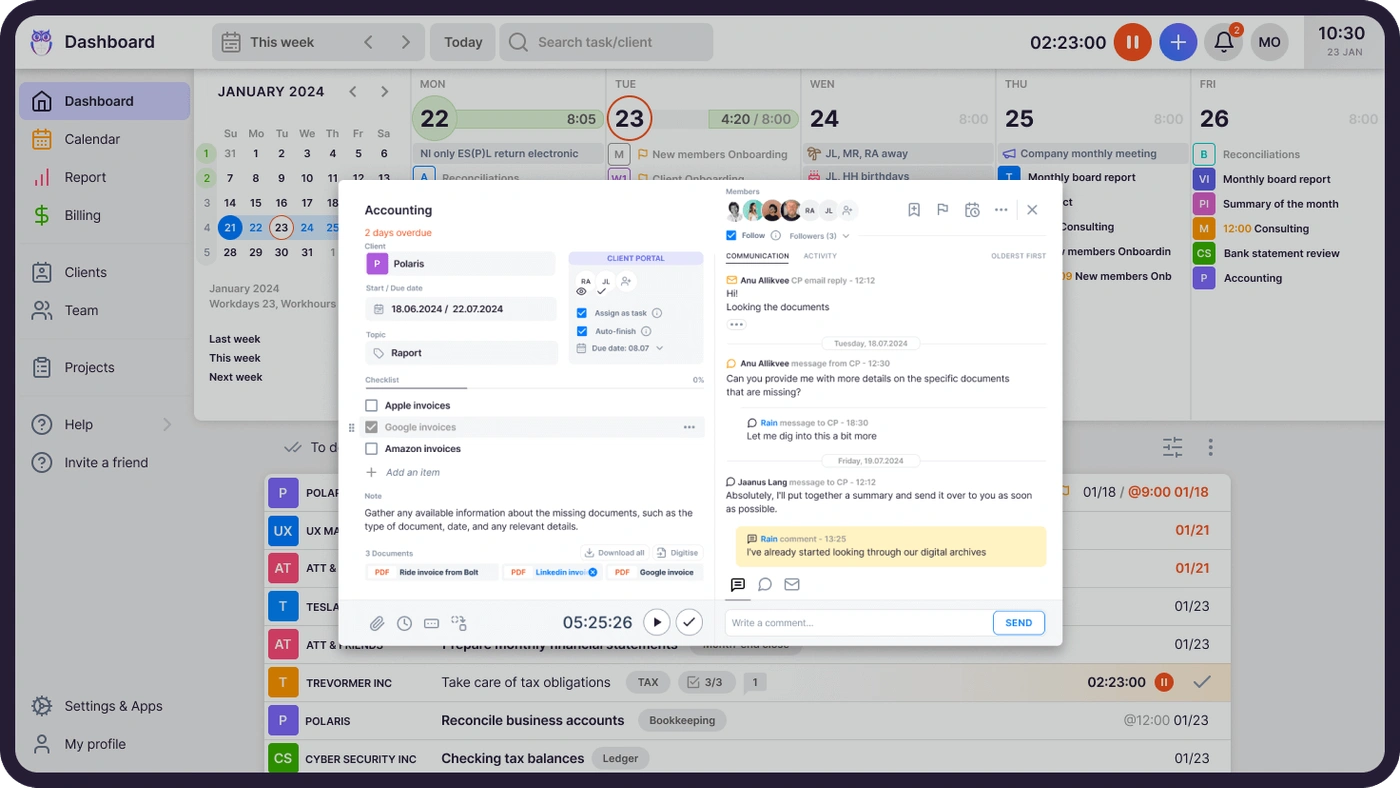
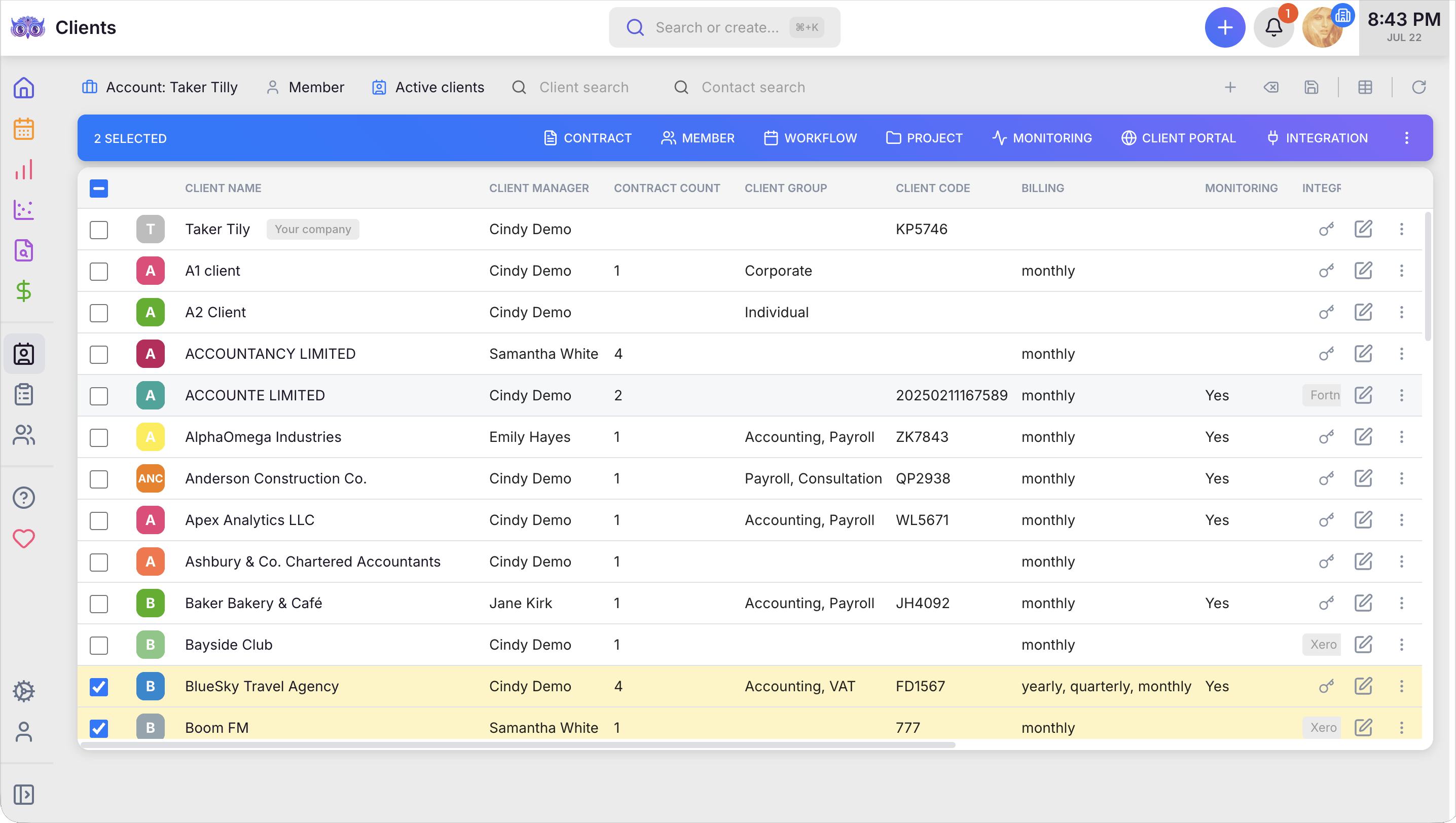
What you can do is keep the account’s context with the client instead of in one person’s head. A client management platform like Uku keeps each client’s contacts, tasks, emails, notes and documents on one record, so whoever takes over starts with the history in front of them.
5. Your client doesn’t feel understood
Sometimes you pick up a signal early and move quickly to fix it. But that signal isn’t necessarily the real problem, so you end up fixing the wrong thing while the real one stays.
Price is a good example. When a client says your fees are too high, it’s easy to assume the answer is a lower fee.
The client may really be telling you that the relationship no longer feels worth what it used to. A lower price can’t bring that back.
6 things you can do before a client starts looking elsewhere
Keeping a good client can seem hard, but it mostly comes down to a few things done consistently.
1. Review your engagements before they go out of date
Set aside time each year to look at the work you do for your long-term clients.
Has the business changed? Have they added employees? Are they doing something new? Does the scope you agreed to still make sense?
You may not need to change anything. But you should know where things stand.
2. Give yourself a reason to call when nothing is wrong
If your only calls happen around tax deadlines and document requests, you’re giving the relationship very little room to grow.
A quarterly call is enough. It can be a proper business review or a ten-minute conversation about what’s coming up.
You’re simply making sure the relationship doesn’t disappear between deadlines.
3. Know more than one person at every client, and let them know more than one of you
Look at your most important accounts and ask how many people you actually know there.
If the answer is one, start building a second relationship now, while everything is fine. Then, if your contact leaves, you aren’t left trying to figure out who the new decision-maker is.
The same applies on your side. Give your clients more than one person to go to in case their usual contact at your firm leaves.
4. Make some of the relationship personal
A welcome gift, a message when a client reaches an important business milestone, or a small gesture that shows you remembered something can make a difference.
For instance, you could source blank apparel from an ecommerce supplier, brand it with the client’s logo and yours, and send it along with a handwritten note. Anything works as long as it fits the client’s taste.
It won’t rescue a poor client experience, but it can strengthen a good one.
5. Keep the useful history with the account
Your team shouldn’t have to rely on one person’s memory to understand a client.
Record the decisions that matter, important conversations, client preferences, recurring problems and anything else that would save the next person from asking the same questions again.
This is the work a client management platform like Uku is built to carry: the record stays with the client, so it’s still there when the people around it change.
6. Act when the relationship feels different
You don’t need proof that the client is unhappy.
A slower reply, a missed meeting, or questions about services you don’t provide are reason enough to call.
Ask how things are going and give the client an opening to tell you what has changed.
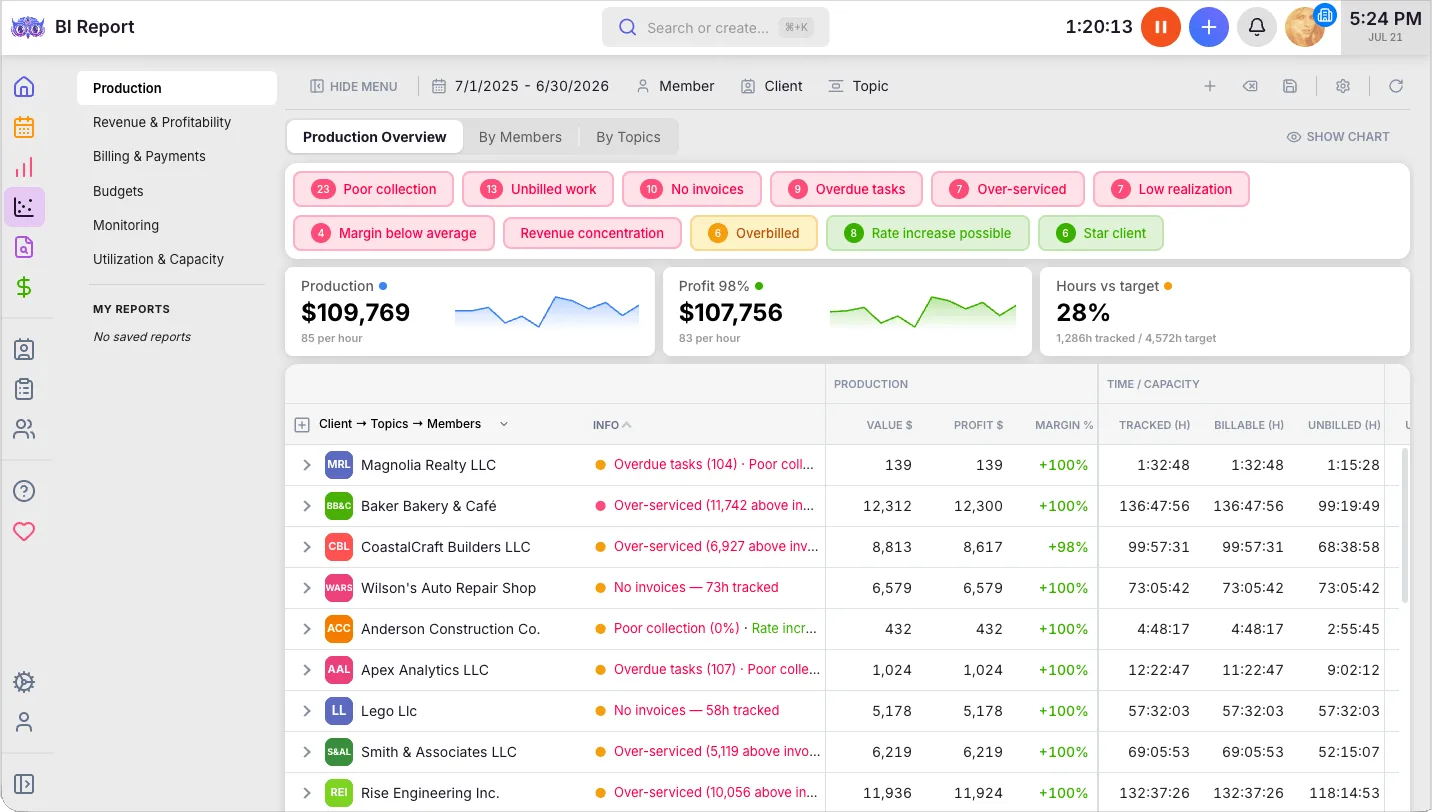
Some signals show up in your own numbers before the client says anything: tasks running overdue on their account, or far more hours going into the work than you invoice. In Uku, the BI report flags these per client, so you can see which accounts need a conversation.
Wrapping up
You can’t keep every client, but you can control how early you notice that something is changing.
Watch for slowing communication, revisit engagements as the business grows, and make sure key client knowledge stays with the account.
Get to know more than one person, and give yourself reasons to talk to the client when there’s no deadline hanging over the conversation.
To keep every client’s records in one place and give your team something to work from when people change, use a client management platform built for accounting firms, like Uku.
Frequently asked questions
Why do long-term clients leave an accounting firm?
Rarely because of one event. The usual causes build up over years. Contact drops to deadlines and document requests, the client's business outgrows the original scope, the whole relationship runs through one employee, a staff change forces the client to explain everything again, or a complaint about fees is really a complaint about value.
What are the early signs that a client is about to leave?
Slower replies, missed or rescheduled meetings, questions about services you don't provide, and fee complaints that come up more often than before. None of them proves the client is unhappy, but each is a good enough reason to call and ask how things are going.
How often should an accounting firm check in with long-term clients?
A short call once a quarter is enough for most clients, plus a review of the engagement once a year. The quarterly call keeps the relationship alive between deadlines, and the annual review catches a business that has grown past the work you originally agreed to.
How do you keep a client when the employee who handled their account leaves?
Make sure the client knows more than one person at your firm before anyone leaves, and keep the account's history with the client record rather than in one person's memory. Decisions, preferences, recurring problems and past conversations should be where the next person can find them without asking the client again.