

Choosing between Jetpack Workflow and Uku for your accounting practice management often comes down to these five critical questions:
- Do you need a focused workflow tool or a comprehensive practice management platform with modular implementation?
- Is automated billing and invoicing important to your firm’s efficiency?
- Do you require a branded client portal for seamless client collaboration?
- How much do time tracking insights and profitability analysis matter to your business decisions?
- Are integrations with accounting software like Xero essential for your workflows?
In short, here’s what we recommend:
👉 Jetpack Workflow is the focused workflow management tool built specifically for accountants and bookkeepers who want a straightforward solution for tracking tasks and deadlines. With its library of over 70 pre-built templates and intuitive interface, it helps firms standardize recurring work and ensure nothing falls through the cracks. However, it lacks built-in client portals, automated billing, and native integration with Xero, making it best suited for firms that already have other systems handling those functions.
👉 Uku is the comprehensive practice management platform that brings workflow automation, time tracking, automated billing, CRM, and a fully branded client portal together in one unified solution. What sets Uku apart is its modular approach: firms can start working on day one with just the features they need, then add capabilities as they grow. Trusted by over 1,000 clients across 25+ countries, it transforms how accounting firms manage everything from task assignment to invoicing.
With flexible pricing that includes a free Solo plan and integrations with Xero, QuickBooks, and other accounting software, Uku is ideal for firms seeking to consolidate their tools and gain actionable insights into profitability.
Both platforms serve accounting professionals, but they represent different approaches to practice management. Your choice depends on whether you need a dedicated workflow tool or a complete solution that handles your entire practice operations.
Table of contents:
- Jetpack Workflow vs Uku at a glance
- The fundamental divide: Workflow focus vs comprehensive practice management
- Jetpack Workflow excels at straightforward task tracking
- Uku delivers end-to-end practice management
- Client collaboration approaches differ significantly
- Billing and invoicing reveal platform philosophies
- Time tracking and profitability insights
- Integration capabilities and accounting software connectivity
- Pricing models and value comparison
- Jetpack Workflow vs Uku: Which should you choose?
Jetpack Workflow vs Uku at a glance
| Jetpack Workflow | Uku | |
|---|---|---|
| Core Philosophy | Focused workflow management | Comprehensive, modular practice management |
| Starting Price | $36/user/month (yearly) | Free (Solo plan) |
| Template Library | ⭐⭐⭐⭐⭐ 70+ pre-built templates | ⭐⭐⭐⭐ Customizable templates |
| Client Portal | ❌ Not included | ⭐⭐⭐⭐⭐ Fully branded, feature-rich |
| Automated Billing | ❌ Not included | ⭐⭐⭐⭐⭐ Comprehensive automation |
| Time Tracking | ⭐⭐⭐⭐ Well-integrated | ⭐⭐⭐⭐⭐ Multi-method with billing link |
| Xero Integration | ❌ No native integration | ⭐⭐⭐⭐⭐ Full integration |
| QuickBooks Integration | ⭐⭐⭐⭐ Available | ⭐⭐⭐⭐⭐ Available |
| Reporting & Analytics | ⭐⭐⭐ Basic | ⭐⭐⭐⭐⭐ BI Reporting with profitability analysis |
| Capacity Planning | ⭐⭐⭐⭐ Plan view (Scale tier) | ⭐⭐⭐⭐ Workload overview |
| Free Plan Available | ❌ 14-day trial only | ⭐⭐⭐⭐⭐ Solo plan (free forever) |
| Best For | Firms needing simple task tracking | Firms seeking unified, modular operations |
The fundamental divide: Workflow focus vs comprehensive practice management
Jetpack Workflow was created by David Cristello after he identified a specific issue in the accounting industry: firms were struggling to manage thousands of deadlines across numerous clients, often relying on spreadsheets and physical files.
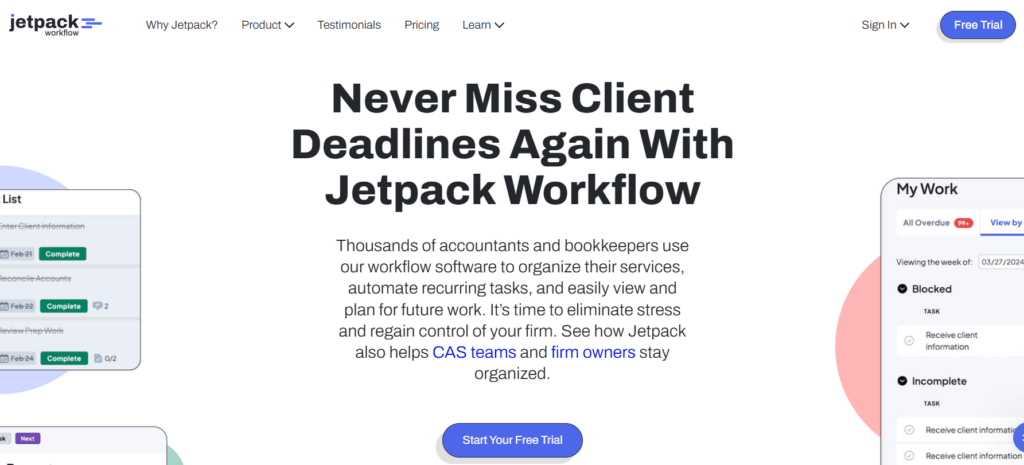
The platform was built to solve this “checklist problem” for recurring client management. This origin story shaped Jetpack Workflow into a purpose-built tool for standardizing, tracking, and automating workflows. The company focuses primarily on doing workflow management exceptionally well, though it has added features like time tracking and QuickBooks integration over time.
Uku took a different approach when it was founded in 2014.

Created from the ground up to be international, especially for UK and US markets, the founders came from a design and development background at their studio Artify and identified multiple interconnected problems in the accounting sector: lack of transparency in work, disorganized data, and complicated billing processes.
Rather than solving just one problem, they built Uku to address the entire practice management workflow, from task creation through to invoicing and client communication.
What actually differentiates Uku is its modular approach to implementation. Like adding apps to a smartphone, users can begin with just CRM and tasks, then gradually add features like automated billing, client portal, and BI Reporting as their needs evolve. This means firms can start working on day one, activating only the modules needed and scaling up as they grow.
For firms transitioning from Excel, this approach makes Uku the easiest and fastest practice management tool to onboard from spreadsheets.
The contrast is clear: Jetpack Workflow is a specialist tool for workflow management that assumes you have other systems for billing and client communication. Uku is a unified platform that aims to be the central hub for all practice operations, reducing the need for multiple disconnected tools while allowing firms to implement software step by step rather than all at once.
Jetpack Workflow excels at straightforward task tracking
Jetpack Workflow has earned its reputation as a reliable and effective tool for internal workflow management. The platform’s greatest strength lies in its simplicity and focus.
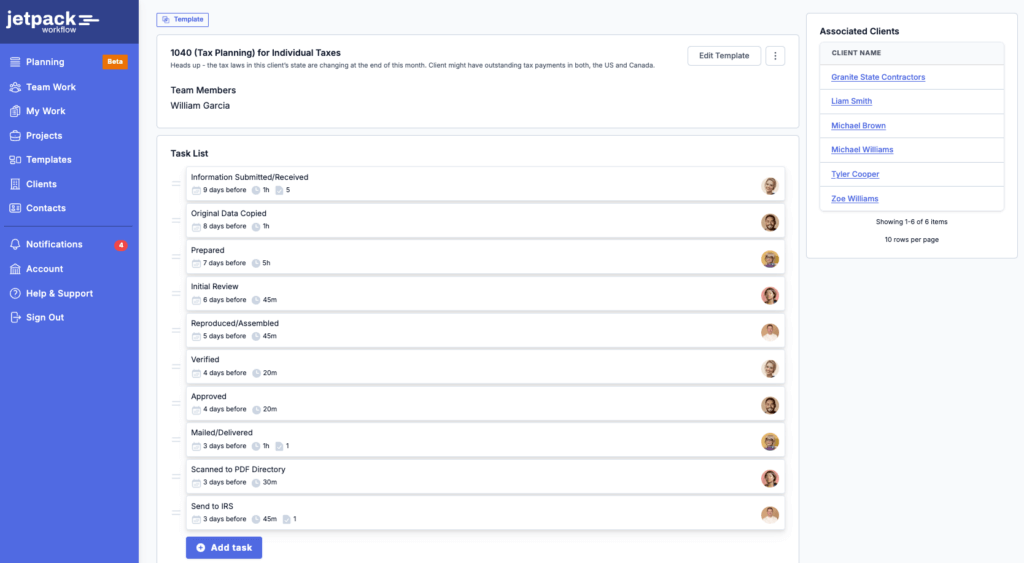
The template library is a standout feature, offering over 70 pre-built templates specifically designed for accounting and bookkeeping tasks. These cover common processes like monthly bookkeeping, tax preparation, client onboarding, and quarterly financial reports. Firms can use these templates as-is or customize them to match their specific processes, significantly reducing setup time.
Source: Jetpack Workflow
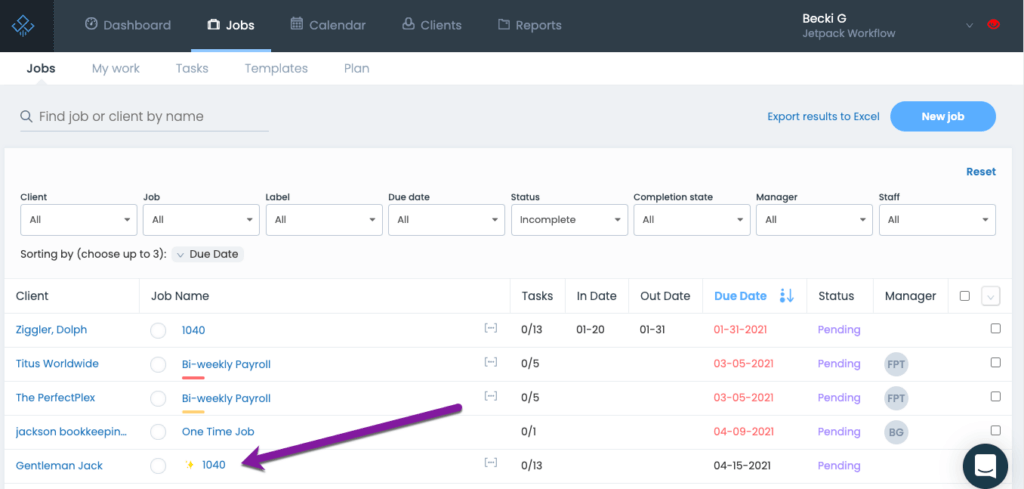
The Jobs and Tasks system provides clear organization for client work. Each job represents a project or service for a client, containing a series of tasks that constitute the individual steps. The interface presents all work in an organized view, making it easy to filter, sort, and search through jobs. The recurring job automation ensures that ongoing client work is automatically generated based on predefined schedules.
Labels function as customizable status indicators (similar to virtual Post-it notes) that help teams communicate about job status. Default labels like “Urgent” and “Waiting on Client” can be supplemented with custom labels, and these are prominently displayed for quick visual reference.
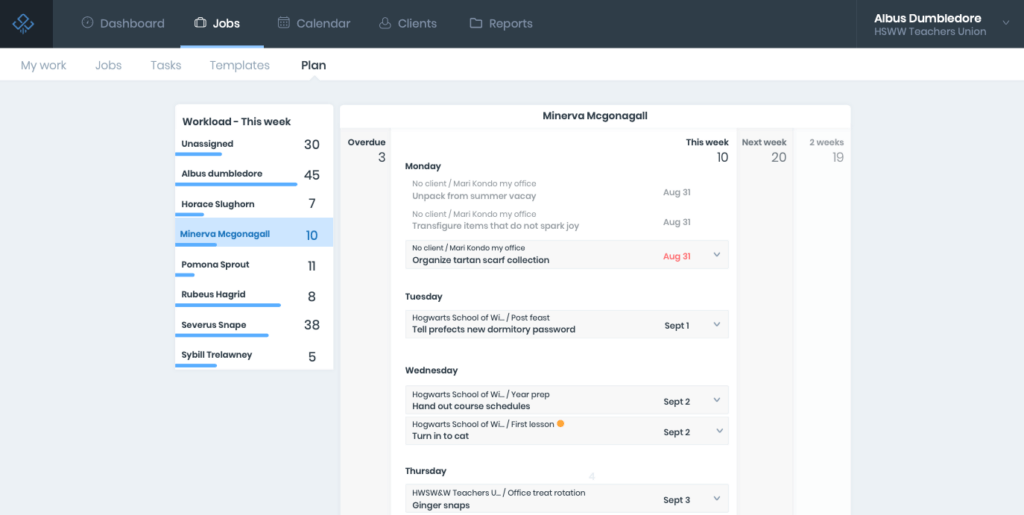
The Planning feature (available in the Scale tier) provides capacity management through a visual interface. Managers can see workloads across team members and drag-and-drop tasks for reassignment, helping to balance work distribution and plan for upcoming demands.
Source: Jetpack Workflow
However, Jetpack Workflow’s focused approach means it lacks several capabilities that many accounting firms need. The platform does not include a client portal, relying instead on email integrations for client communication.
Billing and invoicing features are not included, without the automation that would streamline the work-to-cash cycle. Perhaps most notably for firms using Xero, there is no native integration available (though Zapier workarounds exist), limiting its appeal for practices that rely on this accounting software.
Uku delivers end-to-end practice management
Uku approaches practice management as an interconnected system where workflow, time tracking, billing, and client relationships all inform each other.
Designed as a system your team will actually enjoy using, the platform prioritizes both power and ease of use.
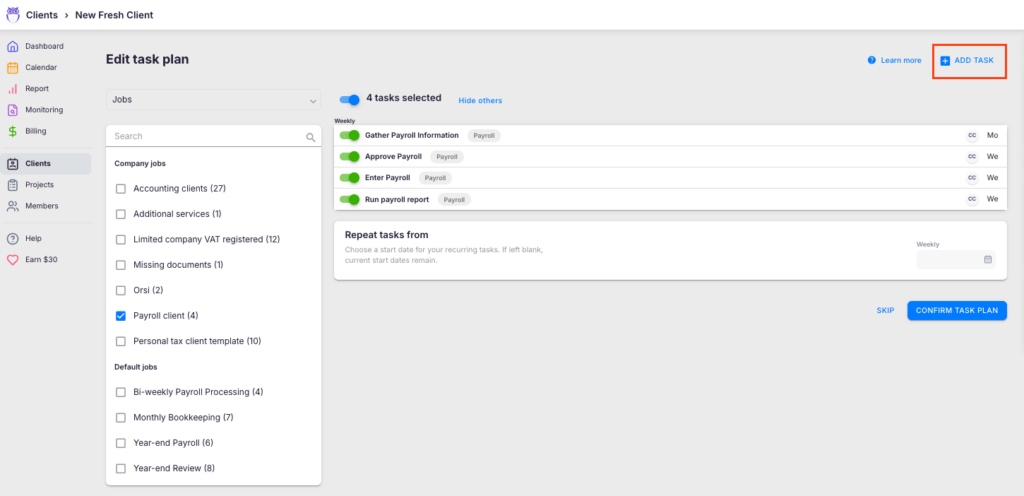
The task management system operates on a three-level hierarchy: task templates, client task plans, and individual tasks. This structure allows firms to create standardized workflows that can be applied to multiple clients while still accommodating client-specific variations. Uku’s automation capabilities handle recurring task generation and intelligent scheduling, significantly reducing manual work.
Source: Uku
The modular approach means firms don’t face overwhelming configuration requirements upfront. Instead, they can start with basic functionality and progressively add capabilities. This fast and flexible deployment allows practices to begin with workflow management, then layer in time tracking, automated billing, and client portal features as they become comfortable with each module.
What sets Uku apart is how its features integrate with each other. Time tracking data flows directly into automated billing, ensuring that all billable work is captured without manual data entry. The system supports multiple tracking methods including a stopwatch, manual entry, and bulk time entry across multiple tasks.
With 90% of actions being one-click, the platform maximizes speed for day-to-day admin tasks. The Mini Uku browser plugin allows time tracking from any webpage.
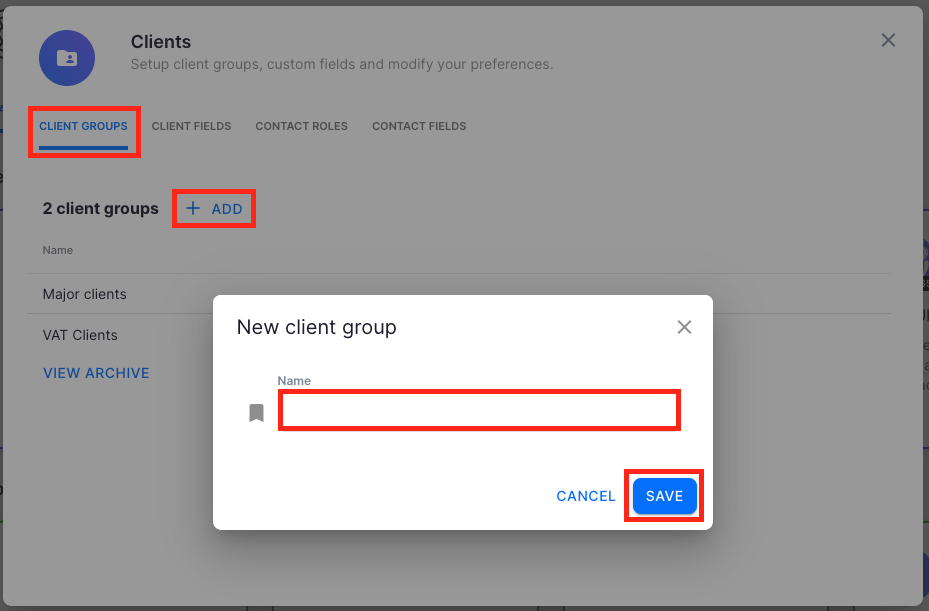
The Client Management (CRM) capability provides a centralized hub for all client information, including contact details, communication history, documents, and billing data. Custom fields allow firms to capture company-specific information, and client grouping enables advanced segmentation for reporting and workflow management.
Source: Uku
BI Reporting in Uku goes beyond basic progress tracking to include comprehensive business analytics reports that provide detailed performance metrics with real-time insights into profitability and budget status.
This provides real-time insight into client profitability and helps firms identify scope expansion before it impacts the bottom line. The Elite plan includes Client Budgeting for tracking project and client budgets, and Document Management for organized file handling. The actionable audit log tracks all changes within the system and even allows restoration of deleted tasks.
The platform integrates with a range of accounting software including Xero, QuickBooks, e-conomic, Merit Aktiva, Fortnox, and others. This connectivity ensures that client data and billing information flow smoothly between Uku and the firm’s accounting system.
Client collaboration approaches differ significantly
Jetpack Workflow approaches client communication primarily through email integration.
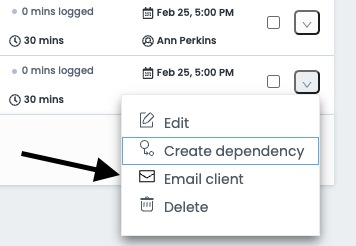
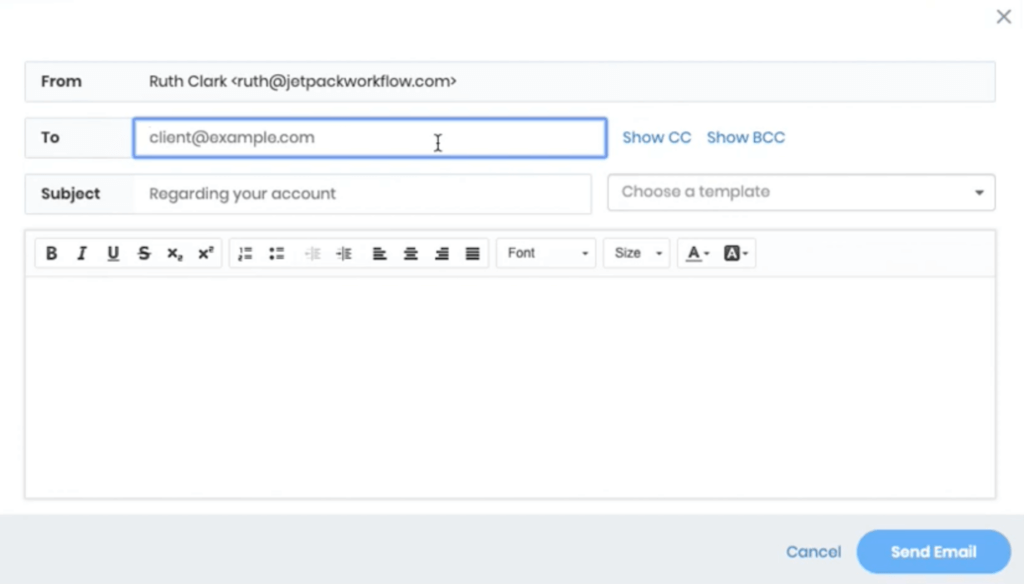
While this keeps things simple, it means that client requests, document sharing, and status updates happen outside the main platform. The platform can send emails to clients directly from within the app and includes automated reminder systems, but there is no dedicated client-facing portal where clients can log in, view their tasks, or upload documents.
Source: Jetpack Workflow
This approach works for firms that prefer to keep client interactions in email or that use separate tools for client communication. However, it can lead to scattered conversations across multiple email threads and makes it difficult for clients to have visibility into the status of their work.
Uku’s Client Portal represents a different approach to client collaboration.
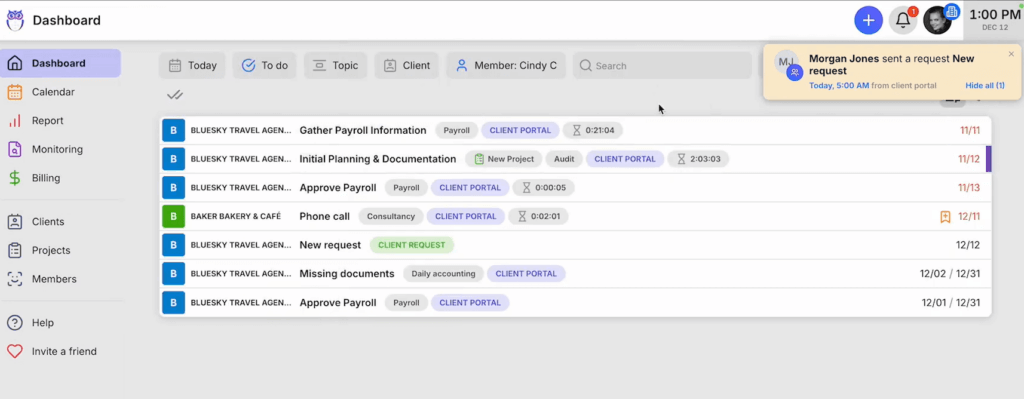
Unlike traditional portals where tickets must be connected to work items, Uku’s portal mirrors the exact same task on both sides. Clients and accountants work on the same item with all communication, actions, documents, logs, and time tracking in one place. Clients access the portal through a “magic link” sent via email, eliminating the friction of usernames and passwords.
Source: Uku
The portal is highly customizable. Firms can brand it with their own logo, colors, domain name, and welcome message. The menu can be customized for each client, allowing firms to show or hide specific features based on the client’s needs or stage in the relationship.
The portal integrates with document management systems like Google Drive, OneDrive, and Dropbox, and can automatically organize files by client, year, and month.
Automatic reminders help solve the common problem of chasing clients for documents. When a task is assigned to a client with a deadline, the system can automatically send follow-up reminders, reducing the awkwardness and time spent on repeated follow-up communications.
Billing and invoicing reveal platform philosophies
Jetpack Workflow does not include built-in automated billing capabilities.
While the platform tracks time and can generate reports on time spent, the actual creation of invoices and management of client billing happens outside the system. Firms using Jetpack Workflow typically rely on their accounting software or a separate invoicing tool to handle billing.
This approach keeps Jetpack Workflow focused on its core strength (workflow management) but means that firms must maintain separate systems and manually transfer data from time tracking to invoicing. The risk of missed billings and the administrative overhead of managing multiple systems are trade-offs firms must accept.
Uku treats billing as an integral part of the practice management workflow, and automated billing is positioned as their primary competitive advantage.
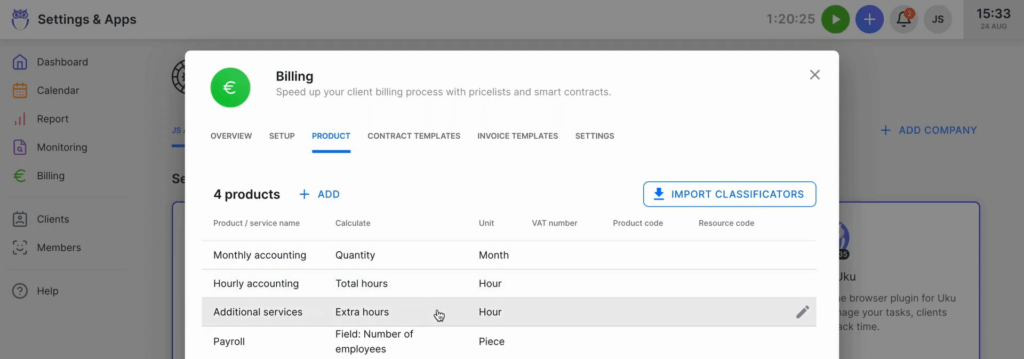
The system collects data from time tracking entries and custom fields, then uses client contracts to automatically generate invoices. What once took 2-3 days now takes approximately 30 minutes, even for firms with over 100 clients.
Source: Uku
The system supports complex price lists based on quantity, time, material, and ranges with different rates for different periods. Advanced rounding rules can be configured based on entry, team, client, or month, allowing firms to properly bill for interruptions and unplanned work.
For instance, a one-minute unplanned call can be automatically billed as 15 minutes. Contract templates can be created for standard service packages and applied to multiple clients, ensuring consistent pricing while still allowing for client-specific customization.
Customers report discovering outdated agreements where they were billing for 8 hours but employees were doing 20 hours of work, with many increasing their turnover by ~20% after adopting Uku’s automated billing system. Integration with accounting software means that once invoices are approved in Uku, they can be exported directly to Xero, QuickBooks, or other connected platforms.
This creates a seamless flow from work completion to invoice generation to accounting record, significantly reducing administrative overhead and the risk of unbilled work.
Time tracking and profitability insights
Jetpack Workflow provides time tracking that integrates with its task management system.
Users can track time using a timer or manual entry, and time entries link to specific clients and projects. The Timesheet Report provides a downloadable breakdown of time entries, including client, date, staff member, and billable versus non-billable hours.
Source: Jetpack Workflow
The platform offers reporting capabilities through its Metrics report, which can help firms understand time allocation and costs. However, the reporting is generally more basic compared to enterprise-level tools.
Uku approaches time tracking as the foundation for business intelligence.
Multiple tracking methods including a stopwatch, manual entry, and bulk time allocation across multiple tasks accommodate different working styles and scenarios. The Mini Uku browser plugin allows tracking time without leaving the webpage you are working on.
The distinguishing feature is how time data connects to profitability analysis. Uku’s BI Reporting provides comprehensive views with deep filters, saved report templates, and three levels of depth: summary, tasks, and time.
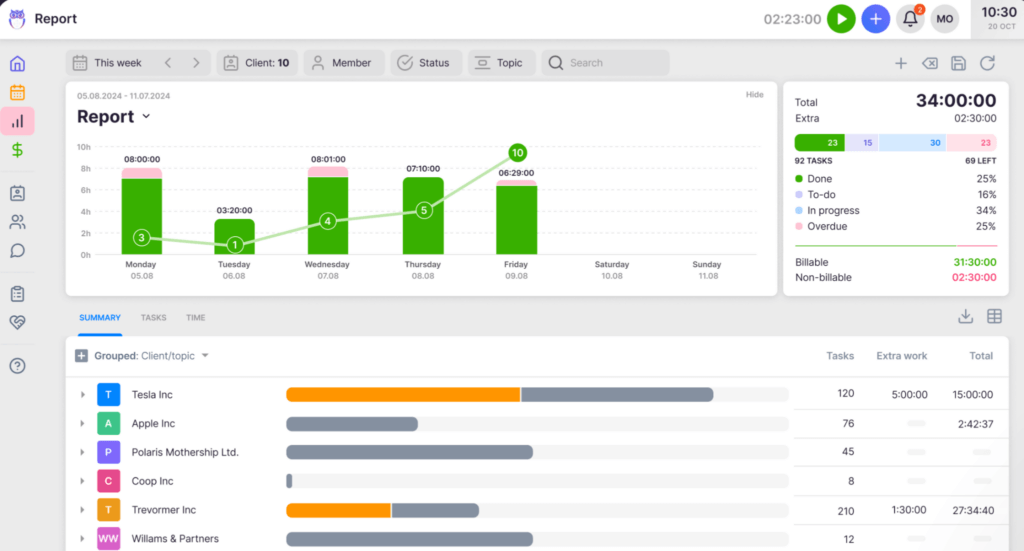
The business analytics reports track both sales prices and actual cost prices. If an employee costs €30/hour but bills at €45/hour, managers can see if they’re profitable. When employees work eight hours but only six are billable, the system provides insights into whether the issue is employee efficiency, client difficulty, or pricing structure.
This proactive approach helps firms address scope creep before it impacts profitability rather than discovering it after the fact. Firms report ~20% reduction in task management time and the ability to serve significantly more clients after implementation.
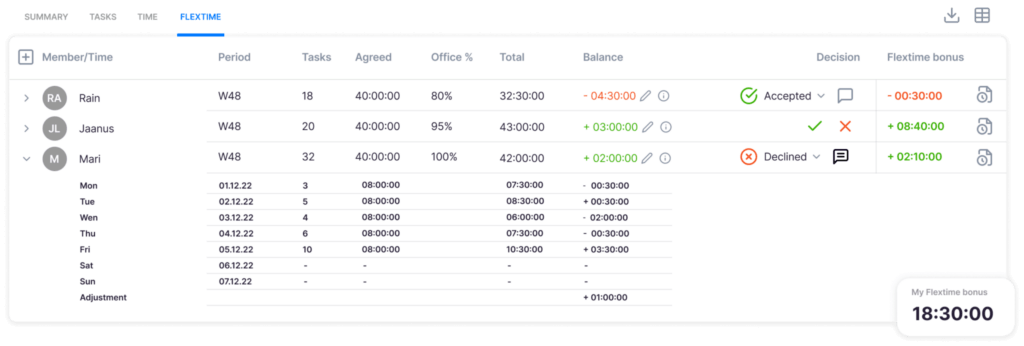
The Flextime Management feature addresses work-life balance by tracking employee working hours, overtime, and vacations. This capability helps prevent burnout and supports firms offering flexible work arrangements, something not commonly found in practice management software.
Integration capabilities and accounting software connectivity
Jetpack Workflow offers integration with QuickBooks Online for syncing accounting processes.
Beyond this, the platform relies heavily on Zapier for connectivity, which allows connections to thousands of applications but requires additional setup and sometimes additional costs. Notably, Jetpack Workflow does not offer native integration with Xero, which limits its appeal for the many accounting firms that use this software (though Zapier templates can bridge this gap for firms willing to set them up).
The Gmail integration allows sending emails to clients directly from within the app, but more advanced integrations with document management systems or other practice tools require workarounds through Zapier.
Source: Jetpack Workflow
Uku provides a broader range of native integrations with accounting software.
The platform connects directly with Xero, QuickBooks, e-conomic, Merit Aktiva, 360 Księgowość, SmartAccounts, Fortnox, and Tripletex. These integrations allow for the import of client data, products, services, and tax rates, as well as the export of generated invoices.
Document management integration includes connections to Google Drive, OneDrive, SharePoint, and Dropbox. Files can be attached to tasks and automatically organized within connected document systems. For UK firms, the Companies House integration can automatically populate client information when setting up new clients.
Source: Uku
The platform supports 12 languages and multi-currency capabilities (€, $, £), making it suitable for international operations. With SOC 2 compliance and 256-bit encryption, Uku also provides enterprise-grade security for firms handling sensitive financial data.
Uku also offers Zapier integration for connecting with additional applications, and a public API for firms that need advanced custom integrations or want to analyze data in external business intelligence tools.
Pricing models and value comparison
Jetpack Workflow offers two plan tiers with both monthly and annual billing options.
The Organize plan starts at $45/user/month when billed annually ($56/month if billed monthly), while the Scale plan starts at $49/user/month annually ($63/month if billed monthly).
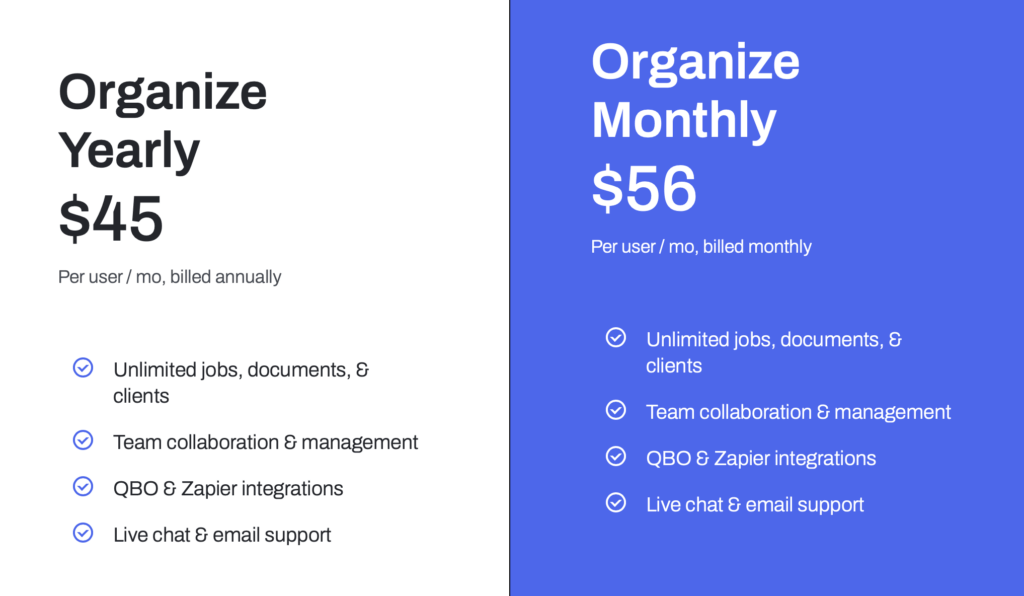
Both options include unlimited projects and clients, unlimited templates and customizable automation, team collaboration and change management, and live chat and email support. The Scale tier adds the Planning feature for capacity management.
The platform offers a 14-day free trial (no credit card required) and add-on custom setup services starting at $299 for firms that need extra help with implementation. Single Sign-On (SSO) is available for an additional fee. Yearly plans include a 30-day no-risk guarantee.
Uku provides a tiered pricing structure with flexible options.
The Solo plan is free for individual users (1 member, up to 25 clients) and includes unlimited tasks, task plan templates, time tracking, reporting, CRM, calendar, and the Mini Uku plugin.
The Team plan starts from $38/member/month and adds teamwork functionalities, email integration, the client portal, unlimited clients, access management, custom fields, company templates, live chat support, integrations, project management, and AML features.
The Elite plan at $48/member/month includes Google Drive and OneDrive integrations, customizable client portal menu, workforce management, actionable audit log, Client Budgeting, and Document Management.
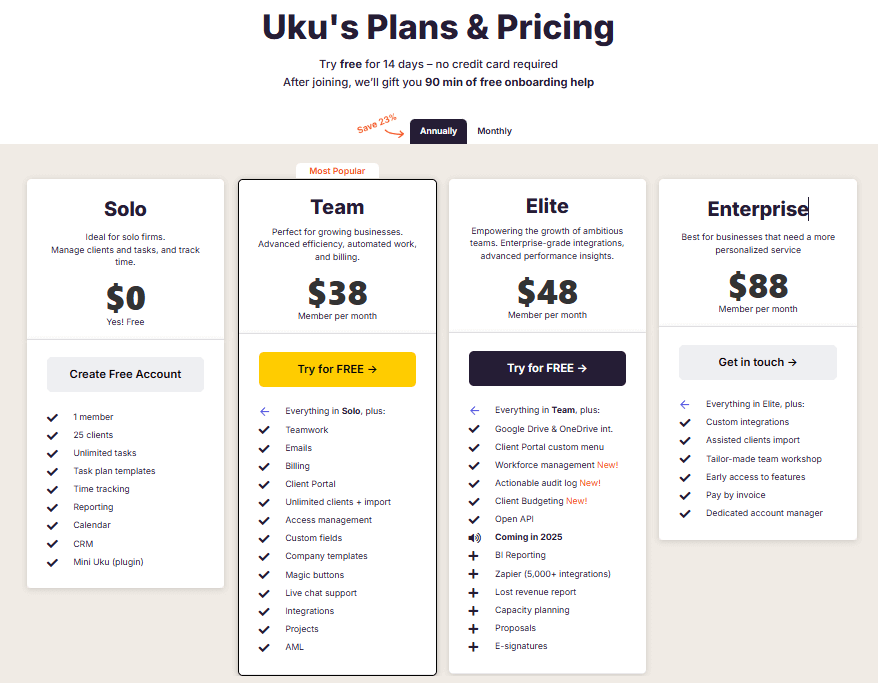
The Enterprise plan from $88/member/month adds custom integrations, assisted client import, tailor-made team workshops, early access to new features, and a dedicated account manager.
Uku offers a 14-day free trial with access to Elite features, 90 minutes of free onboarding assistance with every new account, and both monthly and annual billing options. Annual billing provides a 23% discount. Pricing is available in multiple currencies including €, $, and £.
For a 10-person firm, the annual cost comparison would be approximately $4,320 for Jetpack Workflow (Organize yearly) versus $4,560 for Uku (Team plan) or $5,760 for Uku (Elite plan). However, this comparison does not account for the additional tools a Jetpack Workflow user might need for billing, client portals, and integrations that Uku includes natively.
Jetpack Workflow vs Uku: Which should you choose?
The choice between these platforms depends on your firm’s specific needs, existing tool stack, and growth ambitions.
Choose Jetpack Workflow if:
- You need a straightforward tool for tracking tasks and deadlines without additional complexity
- Your firm already has established systems for billing, client communication, and accounting software integration
- You prioritize simplicity and quick implementation over comprehensive features
- You use QuickBooks Online and do not require native Xero integration (note that Zapier workarounds are available)
- Your primary challenge is standardizing recurring work and ensuring deadlines are met
- You have a small to mid-sized team and want the fastest possible onboarding
- You prefer a single-purpose tool that does one thing well
Get started with Jetpack Workflow here.
Choose Uku if:
- You want to minimize your team’s admin time with 90% one-click actions
- You value ultra-fast onboarding and the ability to implement software step by step rather than all at once
- You need multilingual or multi-currency support for international operations
- You’re transitioning from Excel and want the easiest implementation path
- You prefer flexible monthly pricing rather than annual commitments
- Advanced automated billing that reduces invoicing from 2-3 days to 30 minutes is a priority
- You want a highly customizable client portal where clients and accountants work on the same tasks
- Your firm uses Xero and requires native integration
- BI Reporting and business analytics for profitability analysis are priorities for business decisions
- You are looking to consolidate multiple tools into a single practice management solution
Start your free trial with Uku and experience comprehensive practice management designed for ambitious accounting firms.
The accounting practice management landscape in 2025 offers clear choices for different needs.
Jetpack Workflow has earned its reputation as a reliable, focused workflow tool that helps firms track tasks and meet deadlines without overwhelming users with features they may not need. Uku represents a more comprehensive yet modular approach, bringing together the tools that modern accounting firms need to manage their entire operations efficiently while allowing firms to implement features step by step.
Your decision should be guided by an honest assessment of your firm’s current challenges. If missed deadlines and disorganized workflows are your primary concerns and you are happy with your existing billing and client communication systems, Jetpack Workflow’s focused approach may be exactly what you need.
If you are looking to streamline multiple aspects of practice management, eliminate data silos between disconnected tools, and gain deeper insights into client profitability through BI Reporting, Uku’s comprehensive platform offers a path to greater efficiency and growth.
Both platforms serve the accounting profession with purpose-built features, but they serve different visions of what practice management should be. Choose the one that aligns with where your firm is today and where you want it to be tomorrow.