





How to Manage a Remote Accounting Team Without Micromanaging (2026 Guide)
Ever wondered how to make your remote team perform the best? Are you having troubles with managing a remote team. Here's a few solutions.


Contents
The debate is over. Remote work is no longer a temporary crisis measure; it is the standard operating model for modern, growth-minded accounting firms. For firm owners, the challenge has shifted from “how do we set up Zoom?” to “how do we maintain visibility and high realization rates without hovering over our employees?”
For accounting firm owners managing 10-50 employees, the remote or hybrid model offers a massive competitive advantage: access to top talent regardless of geography.
However, it also exposes cracks in manual workflows. If your firm relies on shouting questions across the office or sticky notes on a monitor, remote work will kill your efficiency.
Here is how to build a remote culture that prioritizes billable hours, client satisfaction, and employee autonomy.
One way to address some of these challenges, especially when hiring remote teams from different countries, is to use global hiring tools. Businesses offering global employer of record services enable companies to hire internationally while handling compliance, payroll, and legal requirements across various countries. This can significantly simplify the process, especially when managing remote teams across borders. While remote work can present unique challenges, leveraging the right tools and services can help businesses effectively manage and scale their remote teams.
This article will explore remote teams’ different challenges and the solutions to these problems.
Shift from Surveillance to Transparency
The biggest fear for firm owners is the loss of control. You cannot see if your team is working, so the instinct is to check in constantly. This is a realization rate killer.
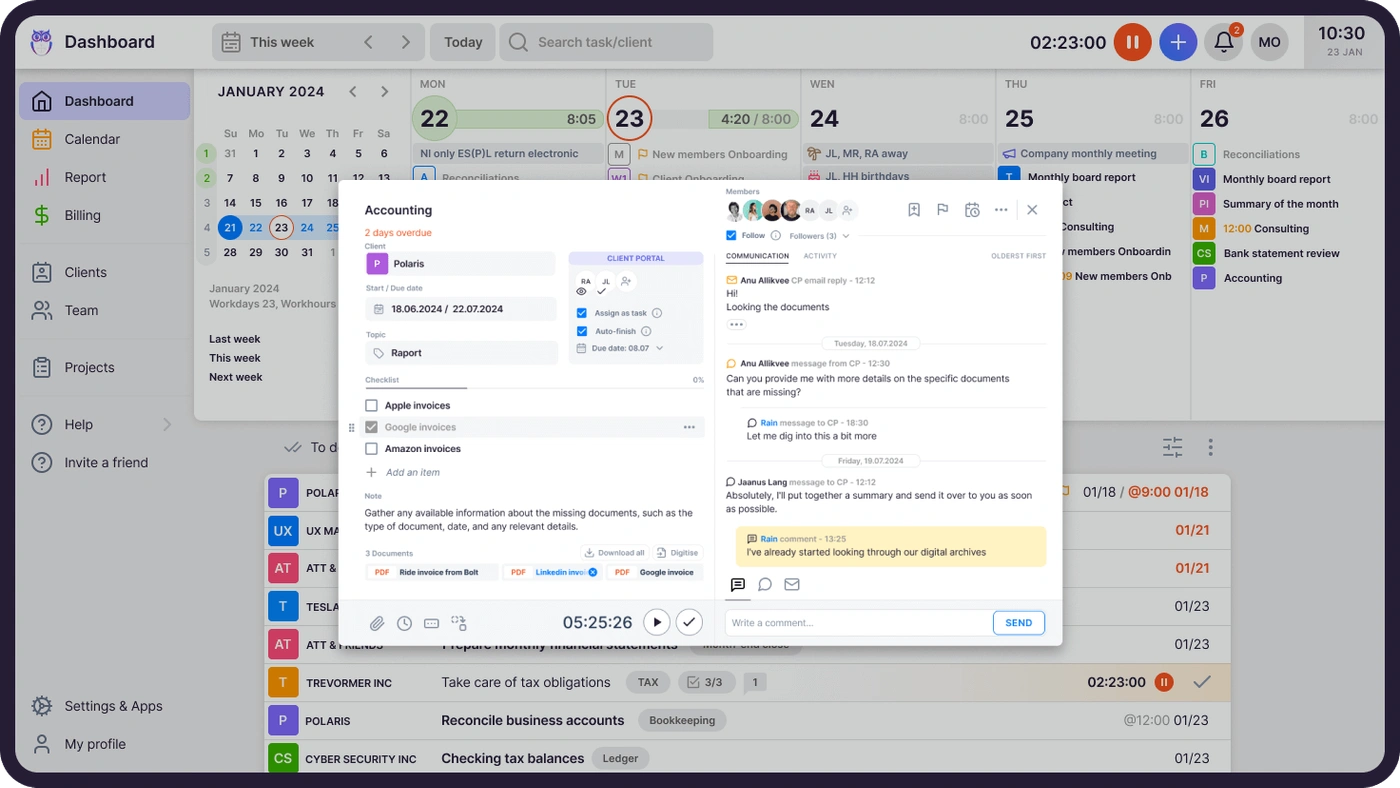
Instead of surveillance, you need centralized visibility. You need a single source of truth where every client, task, and deadline lives. When you have a real-time overview of your employees’ workload, you do not need to ask “what are you working on?” You can see it on the dashboard.
Yahoo! and Best Buy had these issues when they tried remote work. The leaked memo from Yahoo! said, “Speed and quality are often sacrificed when we work from home.” It insinuates that some employees are slacking off or not working as hard as they should. They had too much freedom. This accountability problem pushed these two companies away from remote work setups.
Actionable Takeaway: Implement a Practice Management Software (PMS) that serves as your firm’s operating system. It should show you:
- Who is working on what task.
- Which deadlines are at risk.
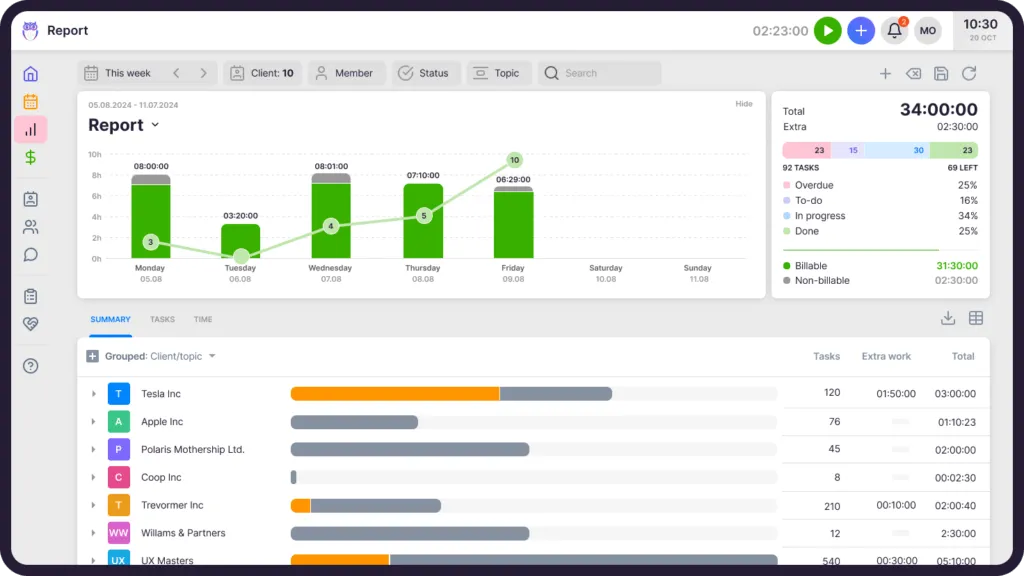
- The profitability of specific clients.
When you have full control of your accounting firm via software, you give your team the freedom to do their work without constant interruptions.
Many firms are also beginning to use AI agents in HR to automate onboarding, answer internal policy questions, and give managers real-time workforce insight without adding administrative overhead. The same shift is happening on the practice-management side: instead of a manager reading the dashboard, an AI agent can read it directly and answer “who is behind this week?” on its own.
Standardize Your Workflows
In a physical office, knowledge transfer often happens through osmosis. In a remote setting, if a process is not documented, it does not exist.
One of the primary pain points for growing firms is that every accountant handles clients differently because processes are not standardized. This creates a massive bottleneck when an employee goes on vacation or leaves the firm, creating a “hole” where client info is trapped in someone’s head.
Actionable Takeaway:
- Template everything: Create standardized workflow templates for recurring tasks like Month-End Close, Payroll, and Tax Returns.
- Centralize documentation: Ensure checklists and client notes are attached to the specific task in your PMS, not buried in email threads.
Uku allows you to create detailed workflow templates that ensure consistency across your entire team. This allows junior staff to work with the same quality as senior accountants, freeing up your time for high-level advisory work.
Improved communication simplifies collaboration
Communication could also be a roadblock in remote work setups. Suppose the members aren’t certain about which tasks have been finished and which ones they need to do and prioritize. It could hamper the team’s productivity.
Yes, you can send emails to one another. However, if those emails are sent only to specific people, other members will still be unaware of the situation, and those emails can still be misinterpreted.
Thus, a single platform where everybody can send and see messages and task progress is essential. Concerned team members can raise questions for clarification. Since all employees will see these messages, replying to their questions will clarify things, ensuring everybody is on the same page.
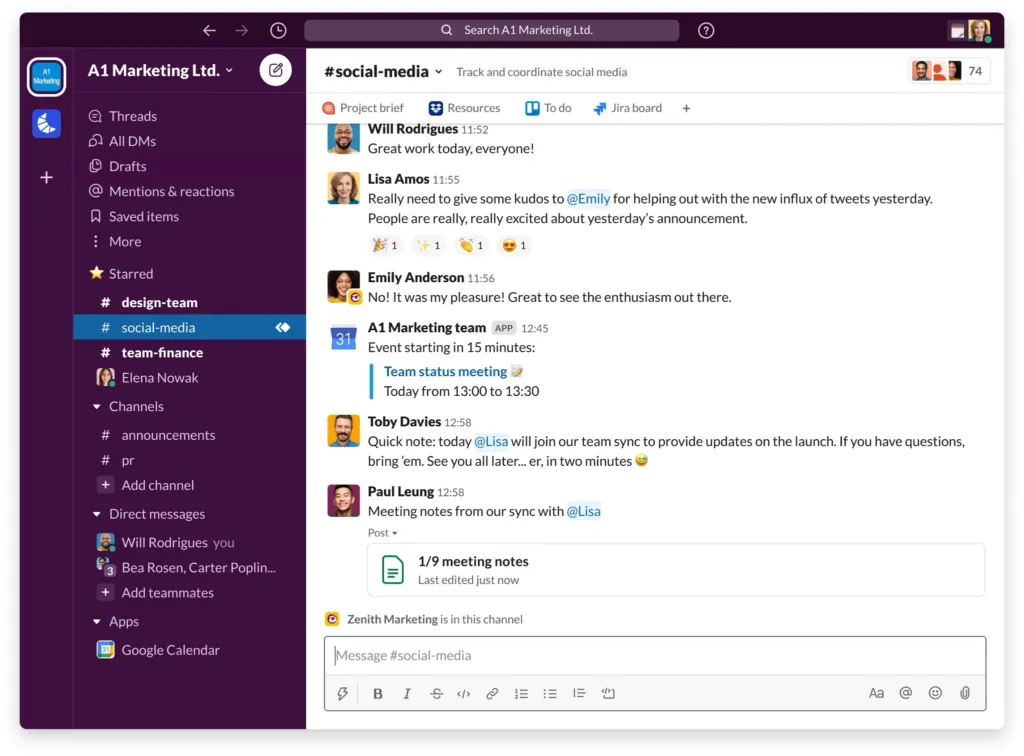
There are many platforms or apps to enhance communication within a remote team, such as Slack.
Slack for remote team collaboration
Slack is a communication app for accountants that divides work between channels and direct messages. It’s also free, making it reliable for small businesses, including those using services like ZenBusiness. However, you can pay for an upgrade and get more features.
Tip: Use different Slack channels to maintain the “coffee corner” chats. A remote team must maintain the same culture as an office team.
Enhancing security among remote teams
Put your whole firm in one place Start free for 14 days. No credit card, full access. Try Uku freeSecurity is a significant concern for remote teams. You don’t want anyone outside of the company to gain access to your files and servers. Likewise, you wouldn’t want cyber criminals to be able to intercept sensitive information, which is why a cybersecurity audit for remote team practices can be an important step to ensure data protection.
Considering this, using a Virtual Private Network (VPN) is wise. It encrypts the connection between the remote worker and the company’s internal network, enabling employees to access company servers, intranets, and databases securely. Deploying a business-grade VPN for remote workers allows accounting firms to easily scale their network security, granting permissions based on user roles without sacrificing connection speed.
Many providers offer VPNs with free trials, enabling users to test their services before committing to a subscription. This can be particularly beneficial for remote workers seeking a reliable and secure solution that meets their needs without any upfront cost.
Tackling loneliness in remote teams
Working in an office also means you belong to a community of people with things in common. Not having that community around can make loneliness a problem among remote employees. Many of them will be alone at home. They have to work for hours, and their situation could cause boredom or loneliness. It also makes them crave social interaction.
Accounting firm managers should consider this because an unhappy workforce will inevitably be unproductive or underperforming. It is the manager’s responsibility to take care of employees’ mental health, not just for the company’s sake but also for their sake as individuals.
As a solution, you could host virtual office parties or team lunches. You can also schedule a team meetup if some team members live close. Another way is organize a yearly getaway for all of your employees. It does not have to be a trip to the Caribbean, but it could be a meetup in a local resort. These could add fun to the otherwise monotonous life of a remote worker.
Camaraderie between employees
Camaraderie and teamwork are important for the team’s productivity, efficiency, and overall performance. Relationships are easier to build in in-office setups than in remote work setups. Being able to see each other and spend time with each other gives an advantage.
In remote work, people see each other mostly in monthly or weekly video call meetings. These meetings may not last very long, and not everyone gets involved in some.
That said, you should maximize these meetings to strengthen the bond between the team members. One way of doing it is by giving the team members who excelled that week or month a shoutout. Ask them to give a short message so that other members can also hear their voice and see their personality. It also gives employees a chance to interact with one another.
Conclusion
Managing remote teams is more challenging than you think. Things that aren’t much of a problem in on-site work, like communication and camaraderie, suddenly become issues.
However, remote work has many benefits for both the company and the remote workers. Therefore, you should not give up on it too quickly. Instead, you should learn how to navigate these challenges. For that, you need to be resourceful and innovative. Tools like Uku can be used to solve communication and accountability issues, while a VPN can solve security issues.

Published Dec 11, 2025 · Updated Sep 2, 2026