
SEO, GEO, and AEO for Accounting Firms in 2026: What You Should Know

First SEO, and now GEO and AEO. Newer terms keep popping up in the marketing space. But the whole idea is to optimize your website for search engines like Google, generative platforms like ChatGPT, and AI assistants.
As an accounting firm, you need a well-represented presence and visibility on the internet. Visibility helps you generate inbound, or organic, leads. The more leads you have, the more you can drive up your revenue. Most importantly, organic leads save you a ton in acquisition cost.
Of course, showing up on your audience’s radar online is only a pipe dream if your website optimization is lacking. And that’s why SEO, GEO, and AEO are very important.
In this article, we’ll explain what these optimization terms are and things to know about them in 2026 if you want to scale your accounting business.
What do SEO, GEO, and AEO mean?
SEO means Search Engine Optimization, and it’s all about improving your visibility on classic search platforms like Google by focusing on:
- Integrating keywords
- Building topical authority
- Writing quality content
- Implementing technical cleanup
For instance, the term “Accounting practice management software” is a primary keyword, and properly adding it to our blogs can help us show up in Google and Bing search results.
GEO, meaning Generative Engine Optimization, is somewhat like SEO, but you’re optimizing for generative tools like ChatGPT, Gemini, Perplexity, and Grok instead. The aim is to appear when users of these tools search for queries related to your brand.

ChatGPT’s response to the top ten accounting management software. Uku ranks high due to proper GEO.
Similarly, AEO, which stands for AI assistant Engine Optimization, helps your website appear in responses to AI assistant queries.
- Let’s say an Apple user asks Siri to look for “Best Accounting Management platforms in 2026.”
- The AI-driven assistant searches for short, semantically similar queries embedded in online content and pulls up Uku.
Note that both GEO and AEO follow similar practices built around clear tasks, short direct answers, strong FAQs, and structured data that help generative engines and AI assistants understand your content with accuracy.
5 to know about SEO, GEO, and AEO as an accounting firm in 2026
Just a decade ago, accounting firms were doing great in blockhouses. Right now? That narrative has changed. If you want to gain a competitive edge, you need a stronger presence and visibility on the internet.
To do that, you must understand some key things about SEO, GEO, and AEO, including how to implement them right away.
1. Topical authority beats broad keyword chasing
Topical authority means creating a LOT of high-quality content with deep insights and actionable answers on a specific subject area relevant to your audience. The goal is to help your readers find solutions to real-life problems while also positioning your accounting firm as an undeniable expert in that niche.
For instance, an accounting firm focused on auditing can centralize the majority of its content, from blogs, case studies, and newsletters to social media posts on just financial auditing. Similarly, students and professionals managing heavy workloads can rely on services like do my essay to produce structured, high-quality content tailored to their specific needs. What happens is that:
- The more information the firm provides on auditing, the more the audience sees it as an expert in that niche
- Search engines also consider relevancy and topical authority when pulling up the firm’s page in response to a query, according to SEJ. That translates to a higher ranking on search engine pages
Now, this is different from chasing broad keywords or trying to rank highly for hundreds of subjects. The SEO advice to rank for as many keywords as possible only leads to two outcomes:
- Failure to actually rank in any of those areas
- Ranking and generating leads that are irrelevant to your true offerings
So, if you want your accounting firm’s website to show up high on search engines and generate the right leads for conversion, building topical authority is your best bet. And here’s how:
- Identify your firm’s primary keyword or subject matter by looking at the leading service you offer
- Study keyword data to see what clients search for and what competitors cover
- Use the topic cluster strategy to create a wide range of content resources that move from educational to decision-focused
- Cover every key question clients ask during calls or consultations
- Create supporting articles that link back to your main service pages
In addition, update each cluster often so your firm remains the freshest source in your niche.
2. GEO prioritizes task-focused content built around real user actions
Users send over 2.5 billion prompts to ChatGPT daily, and the generative platform has close to 4.61 billion visits in a month. You know what these people go there to do? To perform a task.
Tasks can be any of these, but not limited to:
- Calculating tax
- Estimating payroll cost
- Comparing filing options
- Checking compliance steps
- Preparing audit documents
And sometimes, it’s just to find a conversational buddy.
When a user tries to perform a search task on ChatGPT or Gemini, these engines look for task-focused content on the internet that solves a similar task and automatically references it.
For instance,
- A user asks Perplexity something like, “How do I calculate my company tax for a small business in the UK?”
- The engine scans the web for a page that already explains that task clearly and references it
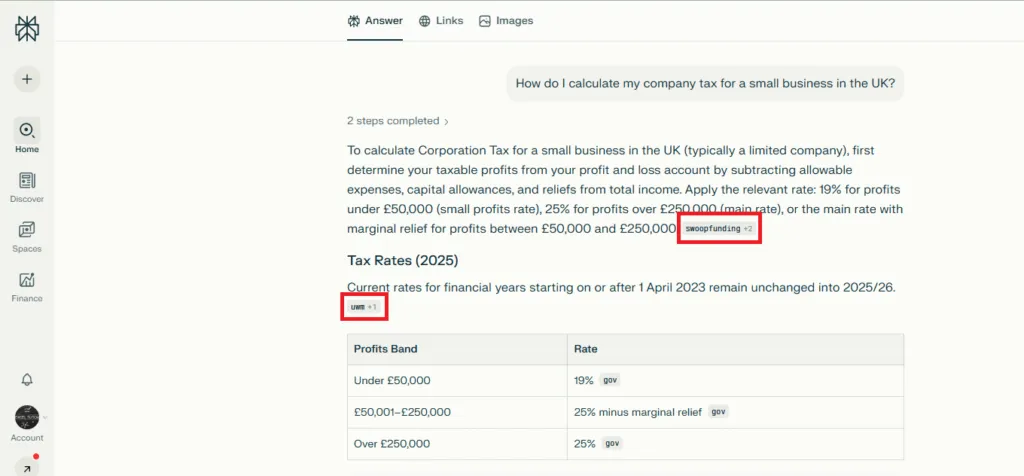
Perplexity references the websites it pulled task-like responses from
If your accounting firm has content that breaks down this exact task, the generative engine may pull from your page, use your steps to answer the user, and sometimes mention your firm.
This is why GEO prioritizes pages that mirror real tasks users want to complete.
To position your accounting firm’s website for generative engines through optimization, do these:
- Create content that breaks tasks into simple steps and answers real user-structured QUICK questions
- Add short answer blocks that explain the task in plain language
- Include real examples that match what users search for
- Use clear headings, tables, and bullet points for easy scanning
- Build FAQ sections that cover the exact questions clients ask
The whole summary is to create content that focuses primarily on “How tos”. “Where tos”, “When tos”, and “Why tos” are similarly crucial so long as they are in a task format.
3. AEO leverages direct answers to client questions
“Hey Siri, who was the first accountant in the United States?”
Siri’s response: Historical records indicate the first regulated license for a Certified Public Accountant in the United States was issued in 1896 to Frank Broaker. Would you like to continue?
AI-powered assistants like Bixby and Siri surf the internet for summaries and sometimes AI-generated overviews to provide concise answers to user queries.
When people ask Bixby simple questions like:
- What is corporation tax in the UK?
- What are accounts receivable?
The AI looks for the most authoritative, summarized source. If your content delivers those short answers clearly and up front, you become that source. Supposing the user wants more data, they can just click your link, which Bixby has already popped up just in case.
The same principle applies to other AI assistant engines.
So, what you need to do to show up is:
- Find the questions your audience members are likely to ask their AI assistants. They’re usually the go-to and day-to-day questions
- Create short answer sections for them on your website, such as FAQs or embedded concise subheadings
- Answer “What is” questions in the most direct way possible. No space for fluffs or lengthy drag-outs. Tools like an AI humanizer can help ensure your answers remain concise while still sounding natural and easy to understand
To find the questions people are asking via their AI assistant, you can use Google’s People Also Asked (PAA).
For example, suppose you want to optimize your blog post on accounting for debt relief for AI assistant engines. Simply type a search for the topic on Google. You’ll get this:
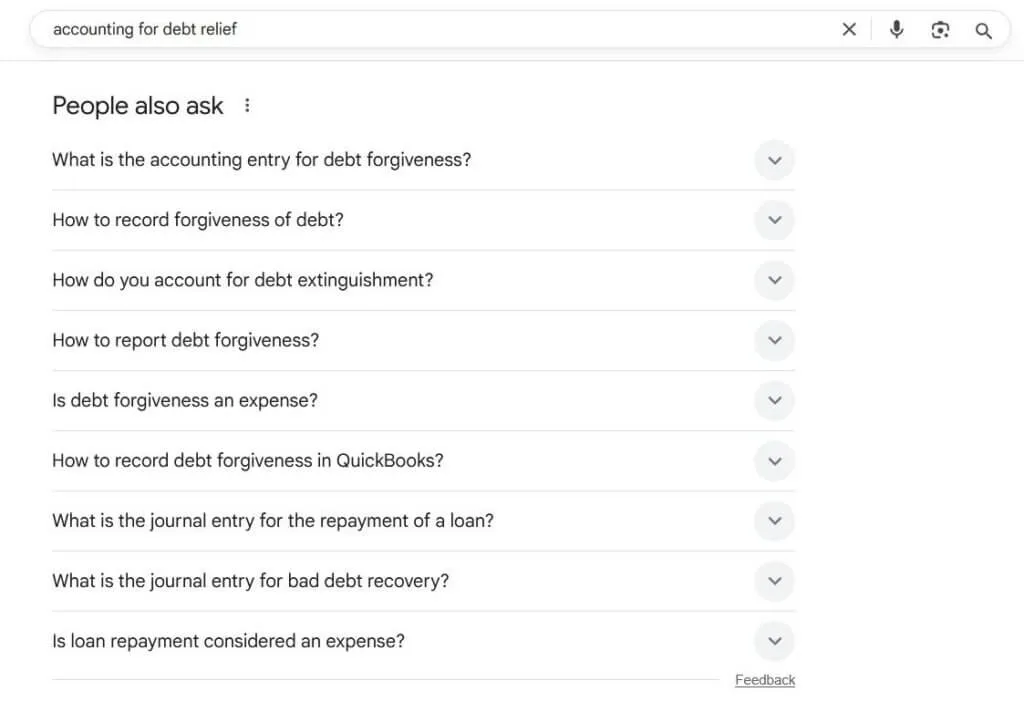
Google’s PAA
You can also achieve the same result by using the AlsoAsked tool. Extract these short questions and provide brief answers to them either within your main content body or via FAQs.
4. SEO is fundamental to GEO and AEO
Older versions of generative engines like ChatGPT relied primarily on outdated training data. Which means they are basically like historians, producing answers based on what they already have, but they don’t know what actually happened yesterday or what’s going on right now.
However, newer versions can now pull data from the internet in real time. Take OpenAI’s GPT as an example. The generative AI accesses the net directly for live browsing through Microsoft’s Bing:
- It modifies the user query to create a new prompt, which is then sent to the search engine
- Once Bing brings out top results, ChatGPT scans the pages available for answers based on a set of factors like relevance and user intent
- Summarizes the key points
- Returns an answer to the user, with references
Likewise, AI assistants like Siri and Bixby rely on search engines to provide users with updated information.
What this means is that if you are not ranking well on search engines, your brand might not show in live results from generative engines or AI assistant systems, making saas link building services and other SEO strategies even more critical for visibility.
So, before kick-starting your GEO, AEO, and any other advanced marketing term, start with SEO first:
- Analyze your website with an SEO checker
- Figure out the on-page, off-page, and technical issues
- Implement schema mark-ups
- Optimize page speed
- Create audience-centric and product-led content
For instance, when we analyzed One Accounting firm’s website with a free SEO checker, we found several on-page SEO issues with meta tags and other warnings flagged with red cautionary signals.
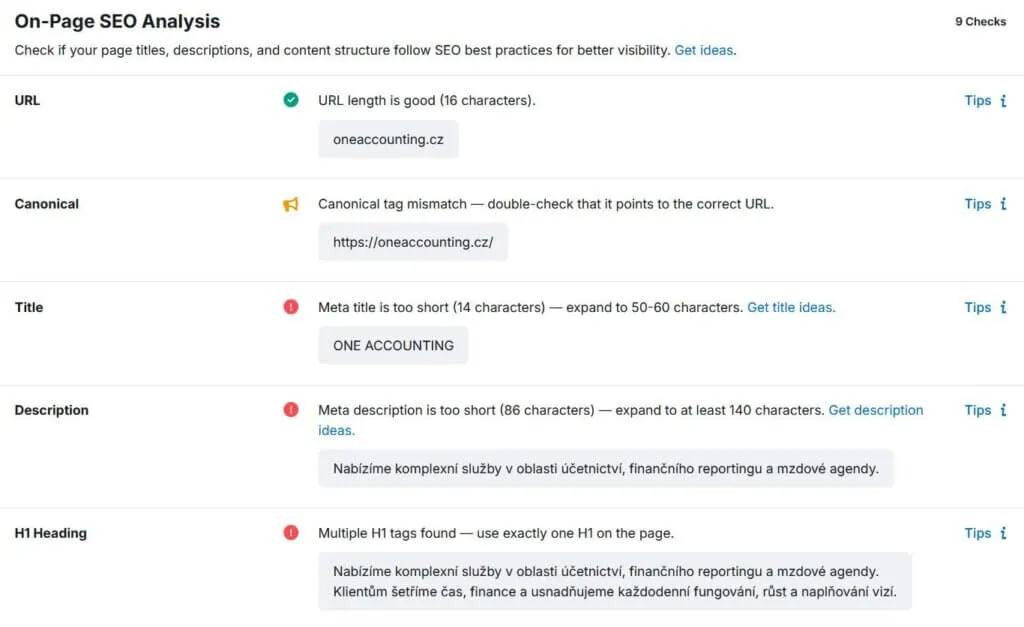
Screenshot provided by author
And then, you can notice site compliance issues, such as a missing robots.txt file.
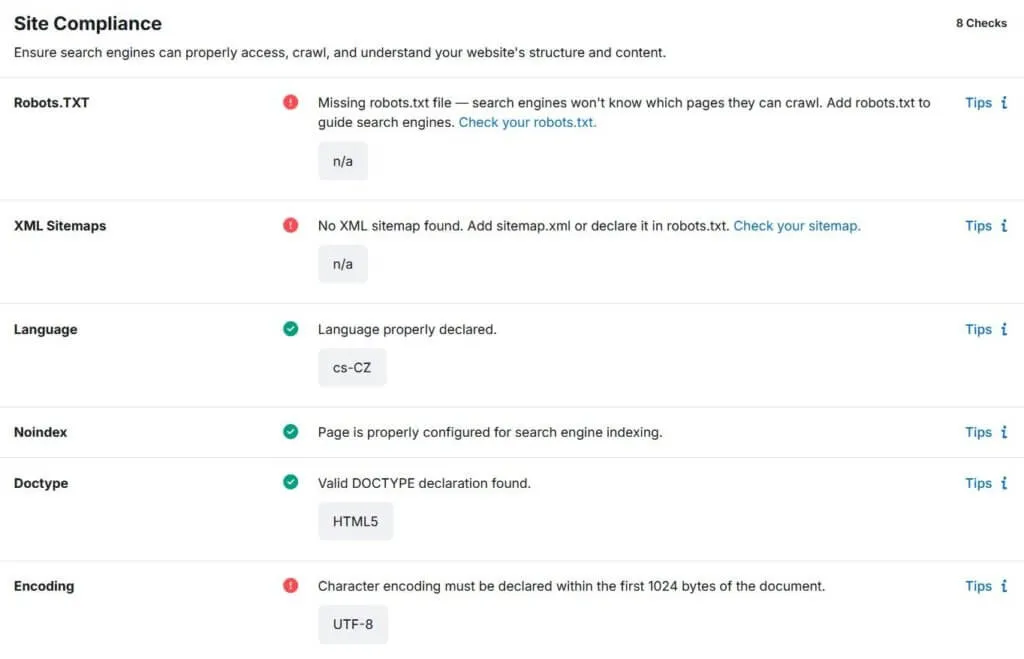
Screenshot provided by author
A robots.txt file is critical for AEO and GEO because it enables websites to be highly crawlable so bots can understand which pages exactly to crawl and rank in AI answers and generative search results.
The firm needs to fix all these issues before it is even ready to show up where it matters.
Additionally, as part of optimizing your website for SEO, ensuring your contact forms and email marketing tools are fully functional is crucial. One effective way to improve the accuracy and reliability of your lead generation efforts is by using an email checker tool. This tool helps verify the validity of email addresses, reducing bounce rates and ensuring your communication reaches the right people. It’s a small but important detail that supports the overall quality of your online presence.
5. Consider hiring an AEO or GEO strategist for deeper optimization
AEO and GEO Strategy are relatively newer aspects of visibility marketing. Most businesses are still struggling to keep up with the changes, and your in-house marketing team might be behind on what works and what does not.
In that case, you can outsource to businesses with a proven record in these niches, like:
The only thing is that outsourcing might cost you a bit of heavy upfront. Of course, in the long run, it gets cheaper. Your team also gets the hang of it and takes ownership of the process. But until then, it’s essential to streamline your scope of work with these agencies by using contract management software and tracking deliverables to avoid costs that don’t translate into real value.
Wrapping up
SEO, GEO, and AEO are not merely buzzwords. You need these three to ensure your accounting website stays visible on search engines, generative platforms, and AI assistants. The more visible you get, the more leads you can generate and convert for higher revenue.
First, build topical authority for better SEO rather than chasing broad keywords. Focus on building task-formatted content to show up in generative engines. Create direct answers to FAQs to show up on the radar of AI-driven assistants.
Most importantly, SEO is fundamental. Build a solid SEO foundation by analyzing and fixing website issues before optimizing for generative engines and assistants. Lastly, consider hiring an AEO and GEO expert if you’re unable to handle the nuances.

Founder & Visionary at Uku. Building the future of accounting practice management — where AI handles the routine so accountants can focus on what matters.

Ready to upgrade your practice management?
Join 1,000+ accounting firms already using Uku to save time and grow their business.